

FilmLift: A Technical Sales Perspective
Flexible plastic packaging and film remain one of the most persistent challenges in household waste processing. Rather than presenting this as a product overview, we wanted to share a more practical viewpoint — based on real conversations on plant floors and years of operational experience.
Below, Dave Lansdell, Technical Sales Director at Impact Air Systems, shares his perspective on why FilmLift was developed, how it works in practice, and where it adds genuine value within modern recycling facilities.
Why We Developed FilmLift – A Practical View from the Plant Floor
“One of the most common issues I hear when visiting MRFs is frustration around flexible plastic packaging and film. It’s everywhere in household waste streams, it has relatively low value, and yet it causes no end of problems if it isn’t removed effectively. Manual picking is labour-intensive, consistency is difficult to maintain, and poor separation quickly affects the quality and value of higher-grade materials. FilmLift was developed as a direct response to those challenges — not as a “silver bullet”, but as a practical way to improve automation where flexible plastics are already being rejected within the process.

The Thinking Behind FilmLift
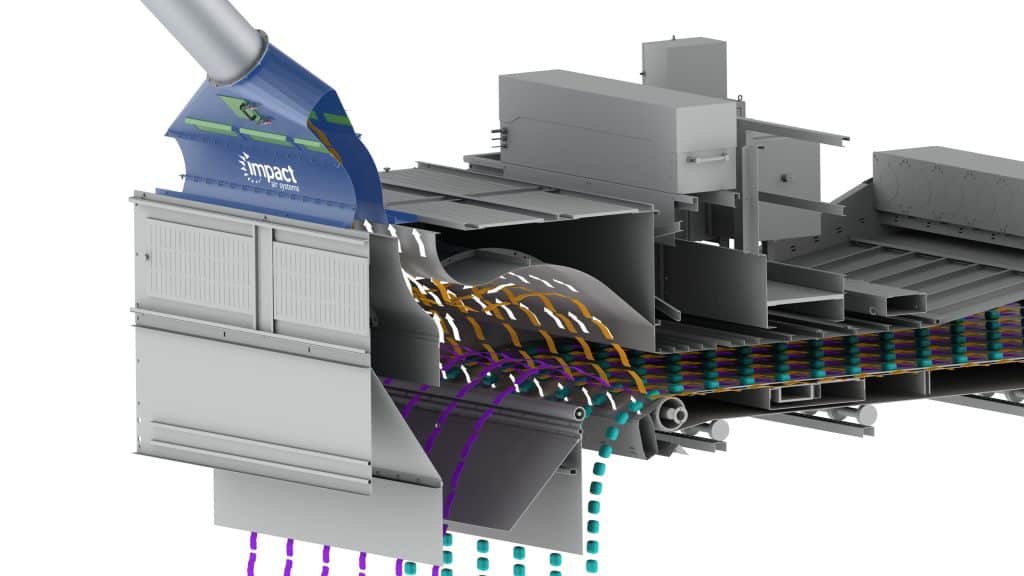
In most modern facilities, optical sorters are already doing a lot of the heavy lifting — grading rigid plastics, fibre, OCC, and quality-control streams. What we repeatedly saw was flexible packaging being correctly identified as reject material but then falling back into the process or relying on manual intervention. FilmLift takes advantage of that moment. By using a carefully positioned capture hood, we apply controlled suction to lift the flexible material while it’s airborne, separating it cleanly from the main material stream. Where optical sorters aren’t suitable, the same principle can be applied at screen discharges or conveyor junctions — it’s the same concept, adapted to suit the realities of each plant.
What Makes the Difference in Practice
The real work happens in the detail. Over time, we’ve refined capture geometry, airflow balance, and ducting layouts by working closely with plant builders, optical sorter suppliers, and operators themselves. The aim has always been straightforward: maximise film capture while minimising losses of valuable materials such as fibre, OCC, and rigid plastics. We’ve also focused heavily on areas that tend to cause problems on site. Moisture, dust, and fines are unavoidable in waste processing, so reducing blockages, cleaning time, and suction losses has been just as important as improving separation efficiency.
Supporting USFFI and the UK’s Simpler Recycling Initiative
In the United States, FilmLift aligns closely with the goals of the US Flexible Film Recycling Initiative (USFFI), which aims to significantly increase the recovery of flexible films from household waste streams. One of the key challenges identified by USFFI is the lack of effective, scalable technology capable of consistently extracting film at MRFs without negatively impacting other commodity streams. FilmLift directly addresses this gap by enabling automated, high-capture removal of flexible packaging at points where the material has already been identified by optical sorters. In the UK, the same capability supports the Government’s Simpler Recycling initiative by helping waste operators improve the consistency and quality of collected materials as recycling requirements expand. By automating the removal of flexible packaging and film, FilmLift reduces contamination within fibre, plastics, and glass streams, making it easier for operators to meet tighter quality standards while managing increased volumes and complexity. By improving both capture rates and material consistency, FilmLift helps facilities on both sides of the Atlantic produce cleaner film fractions that are more suitable for downstream recycling — supporting domestic end markets, reducing reprocessing and rejection risks, and enabling operators to adapt to evolving regulatory expectations without major disruption to existing plant layouts.
Benefits You Don’t Always Expect
One of the things operators often comment on after installation is the improvement in the working environment. Applying suction at the optical enclosure naturally reduces dust, odours, and airborne material. That leads to cleaner floors, less housekeeping, and lower fire risk — benefits that don’t always appear on a specification sheet but matter day to day. FilmLift systems typically operate alongside a baghouse or dust filtration system, ensuring nuisance dust is removed from the conveying air before discharge to atmosphere.
Where We’re Seeing FilmLift Work
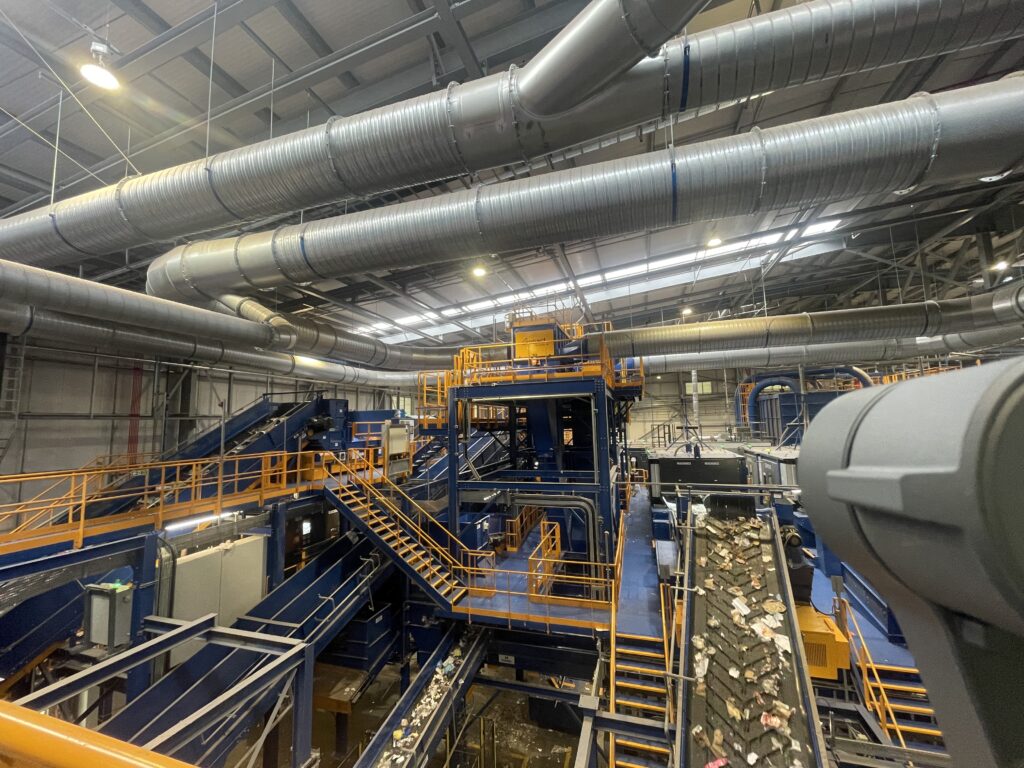
We’ve supplied FilmLift systems to facilities across the USA and Canada, including several large-scale operations, and more recently here in the UK. The system has also been incorporated into the Machinex facility at Sherbourne Resource in Coventry. While every installation is different, the common driver is the same: improving consistency and efficiency of film removal without adding unnecessary complexity.
Costs, Value, and Realistic Expectations
FilmLift isn’t an off-the-shelf product. Each system is engineered around plant layout, number of collection points, and existing process equipment. As a broad guide, a system serving multiple optical sorters may fall in the £400,000–£600,000 range fully installed, while simpler single-point solutions are significantly lower. In terms of return, it comes down to material quality and labour. Downgraded or rejected bales, reprocessing, and manual picking all carry significant cost. FilmLift won’t replace every other technology in the plant, but it can make the overall process more automated, more consistent, and more predictable.
Final Thoughts
FilmLift works because it’s rooted in practical observation rather than theory. It’s not about reinventing recycling — it’s about improving one problem area in a way that fits naturally into existing systems. With sensible operation and routine maintenance, we typically expect a service life of 10–15 years. Ultimately, the goal is simple: make flexible packaging less of a problem, and higher-value materials easier to recover.”
Is plastic film a nuisance to your operations? Would capturing the film improve your recycling output? Contact our Technical Sales Team for more information or to discuss your plant requirements.